

Fun Is Sacred
On Ritual, Rhythm, and Welcoming the Year of the Horse

The cold February night skies have been dressed in stars, and the Little Dipper has positioned itself directly over our house. In the mornings, a flock of geese flies overhead, honking loudly as if announcing the day and arriving a few minutes later each time — nudging us slowly toward spring. Large bundles of yellow Scotch broom have begun popping up along the freeways, bold and showing off.
These are the signs I’ve come to recognize — the markers that time is shifting, that a new season is arriving.
Last summer, my daughter turned three, and as the holiday season rolled around, it was the first year she began to understand tradition and celebration around seasons and cycles.
I have always loved the holidays, especially Christmas and my birthday, since those two were always made extra special by my parents. But even for all the little ones in between, there was always something — a card and chocolate for Valentine’s Day, an Easter egg hunt around our tiny tenement apartment. It’s something I’ve always looked forward to creating for my own child.
I know there are some who worry about the excess of commercialism — that these holidays were designed to drive us into a spending frenzy. And while I know that to be true, living in a modern society makes these events nearly impossible to ignore. So I wonder if there’s a way to embrace them without falling into the trap. Seasonal traditions, even those entangled in capitalism, can be reclaimed through intention and made spiritually meaningful. They don’t have to be about panic overspending, nor about participation in organized religion, but simply about honoring marked time — celebrating the cycles of the year and the shared energy pulsing between us on a specified day. It’s in our power to make of it what we want: to pass down what we love and respectfully leave the rest. In this way, perhaps we can resist the slide into cynicism — cynicism being a heavy and unnecessary burden to lug.
In raising children, there’s something extraordinarily powerful about teaching them ritual and rhythm through seasonal celebration — helping them understand time itself as an unfolding story, one that we participate in. Gifts aren’t necessary and certainly don’t need to be excessive, but personally, I love the pure joy and excitement they give children; it’s a language they understand. Enjoying material things and exchanging gifts can be a privilege of life on earth, a privilege I feel lucky to have. It needs to be managed, of course, and taught mindfully and meaningfully.
I’ve heard it said that every day should be made special for a child and therefore holidays shouldn’t be elevated at all. It’s a nice sentiment, in a way, but kind of a tall order, and I wonder if constant striving for “specialness” can make ordinary days feel like failures. And of course, the opposite extreme — placing too much expectation on a holiday — can be just as heavy if it isn’t extravagant or doesn’t turn out perfectly. I’m not sure there’s a right or wrong way here, but I think it’s worth considering a balance.
These days, as a grown-up, the new joy for me is less about presents and more about the process of preparation around celebration. The ritual of it. The creative endeavor of dreaming, planning, and executing. I love to prepare and build — I love aesthetic curation and attention to detail around a meal, around decorating, and having it all come together. I love the effort it takes — not as a way to be rigid or controlling, but as a moving meditation.
Every February for the past several years, one of my dearest friends, Liz, reminds me to prepare my altar for the Lunar New Year. Hers are always very elaborate and beautiful, stemming from a long line of family traditions and culture. But she insists that I not be intimidated and instead focus on intention and spiritual connection — calling forth my hopes for the year ahead and asking my ancestors for their protection.
So I started off small: a simple dish with a few pieces of fruit and a candle. Over the years, my altars have expanded a little and, encouraged by Liz, I’ve made them my own. I like to add pieces that represent the elements of nature — a small bowl of water, incense for air, candles for fire, rocks and crystals for earth, bouquets of colorful flowers. Sometimes we add sweet treats, a shot of whiskey, or a little wine, thinking of things to offer our ancestors that they might enjoy.
It’s a ceremony that has grown important to me, one I’m looking forward to introducing Remi to. I really love the idea of creating a new family tradition all our own.
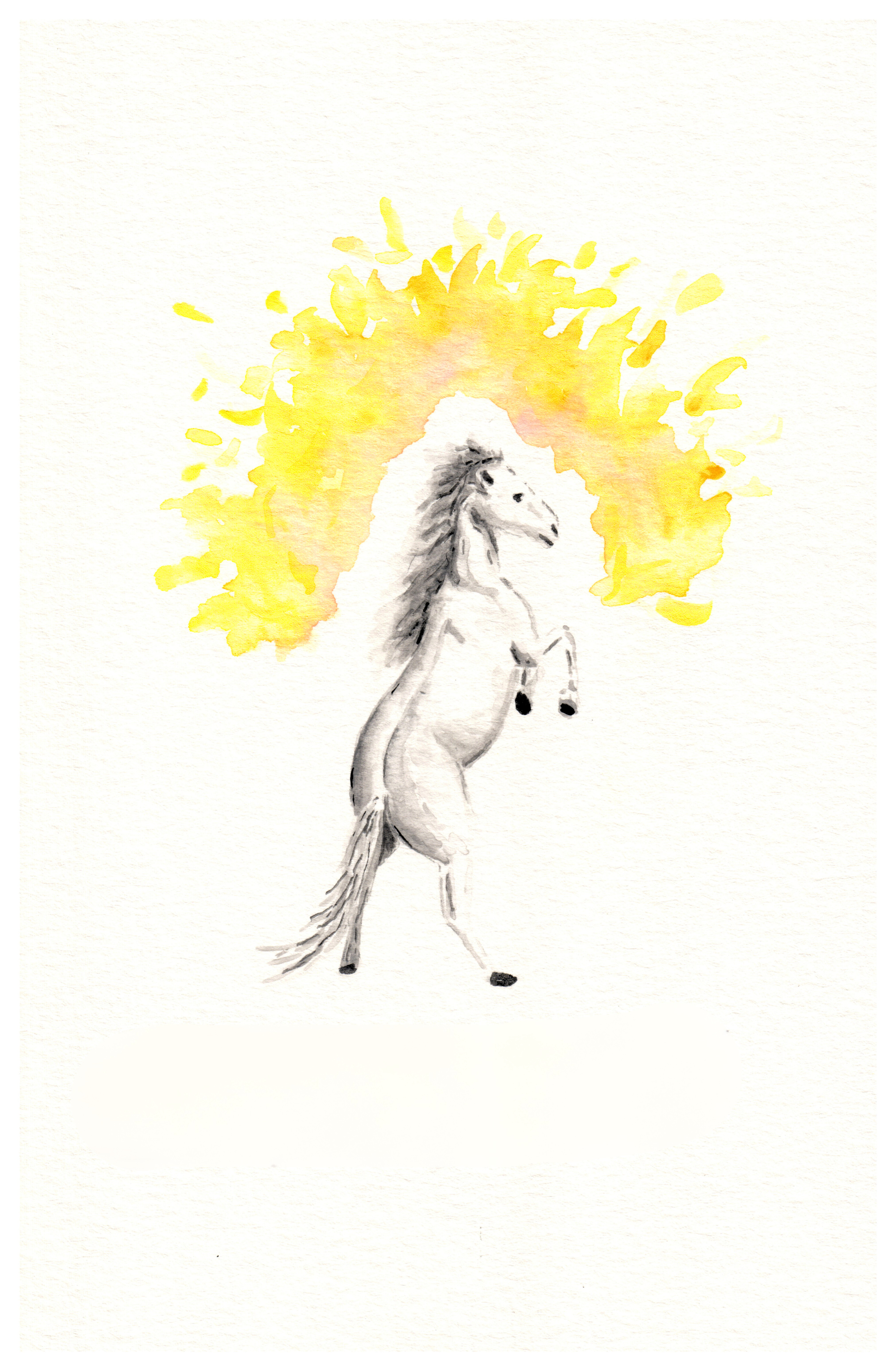
This is the Year of the Fire Horse, so we’ll include some horse imagery, along with the traditional colors of red and gold for protection from negative energy and to bring in good fortune. If there’s anything Remi wants to add, I’ll leave it to her — I want it to be something we collaborate on as a family. For the eve and the day, we’ll eat lighter meals, cook together, clean, and open the windows. We will take time to connect with benevolent ancestors and energy.
“Fun is sacred” is a mantra I’ve lived by for years. It began as an excuse to be reckless with friends, to party hard. But it stayed with me and gathered new meaning over time — less about escape and more about joy as a form of reverence. Honoring joy matters. Creating rituals around our time matters. And it doesn’t have to be heavy or serious to be spiritual — it can be silly, colorful, imperfect.
Because ritual is storytelling. It’s how we process time and participate in it, finding spirituality not in dogma, but in preparation, beauty, and attention. In marking a day, setting a table, lighting a candle, we’re acknowledging the largeness outside of ourselves.
Ultimately, it’s about connection — to each other, to those who came before us, to nature, to the vastness overhead. It’s about making space for the new. For the seemingly impossible. For magic.
However you celebrate your life, I hope it brings you supreme joy. Happy New Year!